

Golf GPS vs Laser Rangefinder: Handheld & Compact Picks for 2026
News originally published by
EIN Presswire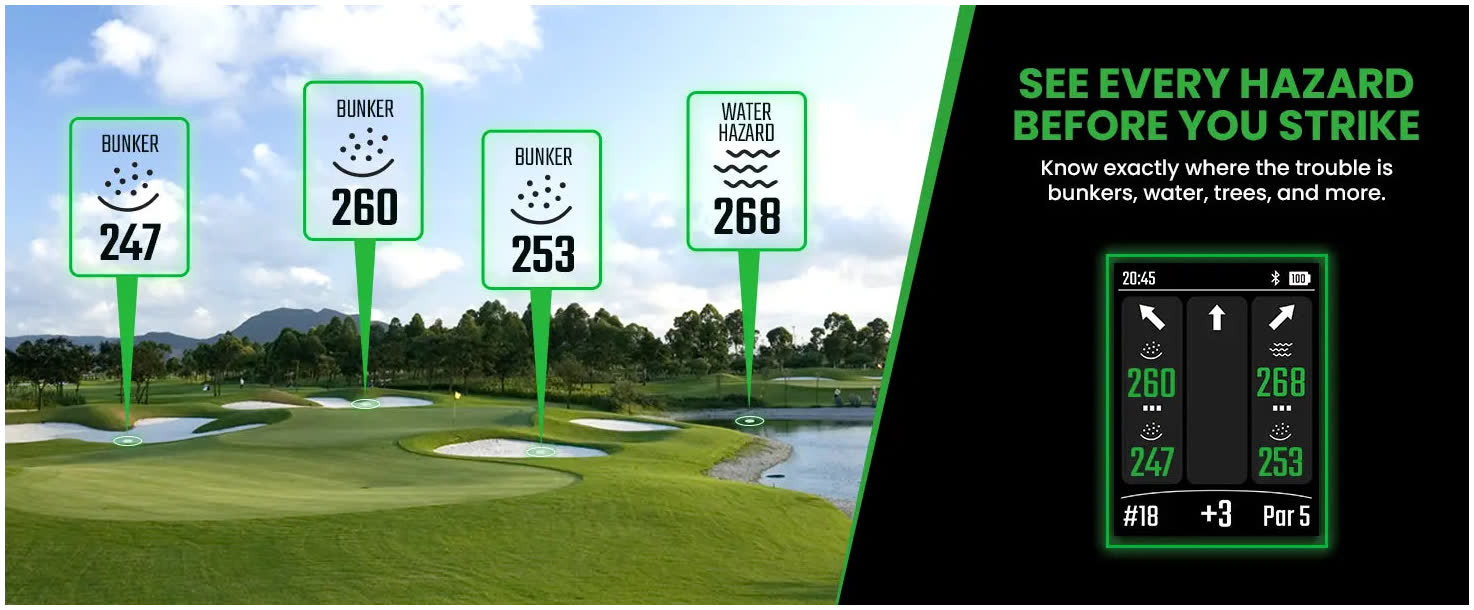
Mapped Context and Direct Target Ranging Solve Different Problems
The fundamental difference between golf GPS systems and laser rangefinders begins with how distance data is generated. A GPS unit utilizes an internal receiver to establish satellite coordinates on the course, calculating linear distance against a pre-surveyed digital vector map. Because it reads mapped coordinates, a GPS displays front, center, and back green margins, layup zones, and hazard boundaries, even when the green is hidden behind a dogleg, trees, or elevated crests.
An optical laser rangefinder operates on active time-of-flight technology. The golfer peers through a magnified monocular optic, centers the crosshairs on a visible target-typically the flagstick or a bunker face-and emits an infrared laser pulse. The device calculates the time required for light to reflect back to the sensor, computing yardage within +/-1 yard. However, this precision requires an unobstructed line of sight; if the pin is obscured by terrain, a laser cannot return a reading.
A direct feature comparison highlights how these contrasting technologies perform across critical on-course evaluation criteria:
Feature-by-Feature Evaluation: GPS Handheld vs. Laser Rangefinder
Measurement Source: Compact golf GPS devices use multi-constellation satellite positioning referenced against digital course mapping databases, whereas optical laser rangefinders use active time-of-flight infrared laser reflections bouncing directly off the target.
Target Requirement: Golf GPS systems calculate coordinates automatically without requiring visual contact, while laser rangefinders require an unobstructed optical line of sight to the flagstick, hazard lip, or tree line.
Primary Data Provided: GPS units display front, center, and back green distances alongside hazard carry yardages; laser rangefinders deliver exact point-to-point distances directly to the visible pin or specific target.
Accuracy Tolerance: Consumer golf GPS systems typically operate within a margin of a few yards of mapped points under clear skies. Optical rangefinders deliver pinpoint flagstick measurements within roughly one yard when locked onto the pin.
Blind-Shot Utility: GPS handhelds excel on blind approaches, doglegs, and undulating terrain where the green is hidden from view; laser rangefinders cannot acquire distances when hills, bunkers, or trees obstruct line of sight.
Speed of Play: GPS devices provide instant glanceable yardages the moment you step up to your ball, while laser rangefinders require pulling the unit from a cart mount, sighting through the eyepiece, and stabilizing crosshairs.
Primary Form Factors: Golf GPS is available in pocket handhelds, smartwatches, and cart-mounted screens; optical lasers are standard monocular optics with magnetic chassis.
Because each device measures a distinct point, a GPS display reading 152 yards to green center and a laser reading 146 yards to a front pin are both completely correct. Confusing green center with flagstick location is the most common reason players mistakenly assume one tool is inaccurate.
Choose by the Situation on the Course
Dprofy V3 Pro GPS speaker
Deciding between GPS mapping and optical laser targeting depends on the tactical situations you face most often:
For an overview of the landing area: On unfamiliar tee boxes facing blind fairways, a golf GPS gives instant context. It reveals yards to runouts, where doglegs turn, and carry distances over hazards. A laser cannot shoot around corners.
For attacking tucked pins: When hitting approaches from 135 yards with clear green visibility, a laser lets you target the pin directly. Knowing the flag sits precisely 133 yards away while the back edge is 148 enables aggressive club selection.
For walking versus cart riding: Walkers often favor lightweight convenience. Glancing at a pocket GPS takes seconds, while uncasing and steadying a laser on windy days requires deliberate preparation.
For challenging weather and lighting: In dense fog, rain, or twilight where optical visibility drops, aiming a laser at a slender pin is difficult. A GPS device calculates mapped yardages regardless of lighting conditions.
What Makes a Compact Golf GPS Practical to Carry
Dprofy V3 Pro GPS speaker
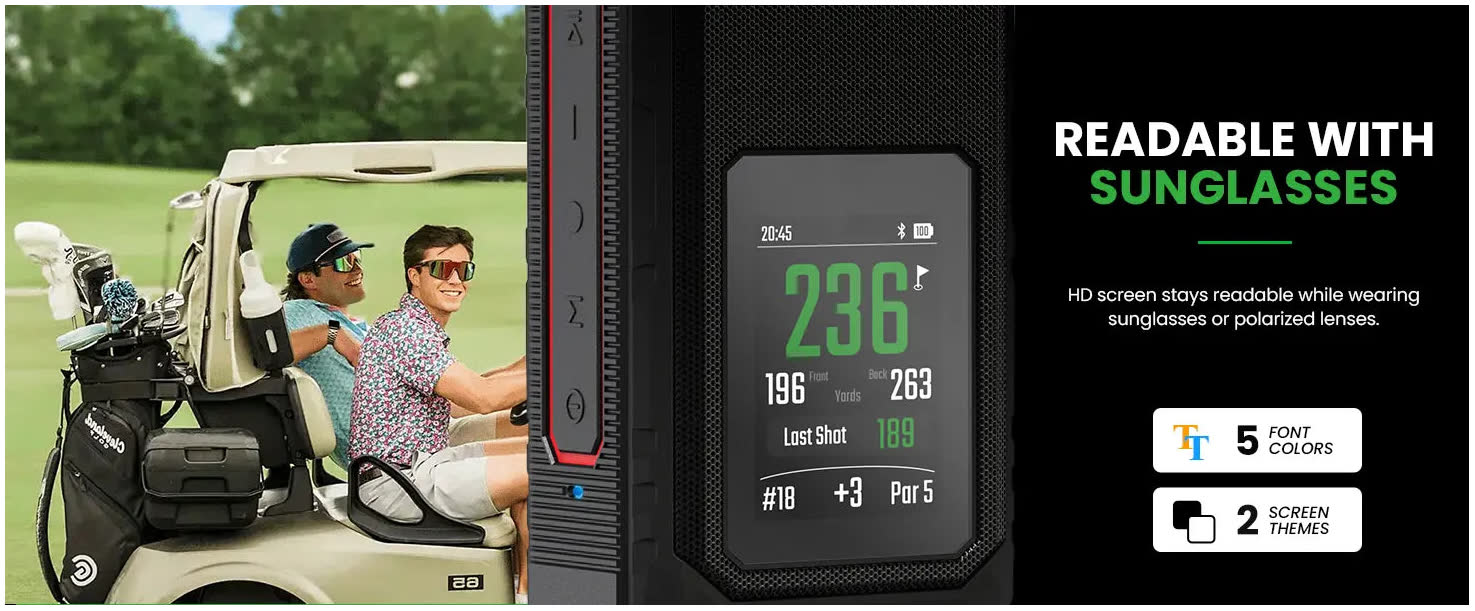
When shopping for a compact golf GPS, physical dimensions, screen legibility in direct sunlight, and intuitive controls are critical. A compact device must slip effortlessly into a trouser pocket, clip to a bag, or mount firmly to a cart without rattling.
Dprofy Handheld Roadmap: an Upcoming Compact Option
Golf GPS devices come in several formats, including handheld units such as the upcoming Dprofy V3 GO and GPS speakers such as the Dprofy V3 Pro. Dprofy is developing the V3 GO as a dedicated touchscreen GPS platform for players who prefer handheld course information.
Bushnell Phantom 3 Slope: Defined Pocket-Size Dimensions
The Bushnell Phantom 3 Slope ($169.99) is an industry benchmark for ultra-compact GPS hardware. Measuring a mere 60 × 76 × 18 mm and weighing only 78 grams, it fits into any pocket or clips to a bag using its included carabiner. It features an integrated BITE magnetic mount, an upgraded touchscreen display, and movable pin placement capabilities across 38,000+ preloaded courses. With an 18-plus hour battery rating, it easily handles consecutive rounds.
Garmin Approach G20 Solar: a Handheld With Solar Charging
For players seeking extended operational battery life, the Garmin Approach G20 Solar ($299.99 MSRP launch) introduces solar charging technology to the handheld golf GPS category. Featuring a sunlight-readable 2.2-inch display, manual pin positioning, and over 43,000 preloaded courses, it provides deep mapping intelligence in an IPX7 waterproof chassis. According to manufacturer specifications, its unlimited battery runtime claim requires continuous 75,000 lux lighting conditions, meaning solar charging serves primarily to extend battery longevity during standard outdoor rounds (source: Garmin official specifications).
A Compact Laser Reference: Bushnell A1-Slope
To understand how a top-tier compact laser compares to handheld GPS units, consider the Bushnell A1-Slope ($299.99). Engineered as Bushnell's smallest laser, it measures 3.75 × 1.42 × 2.36 inches and weighs just 5.1 ounces. It provides 6× optical magnification and delivers target-ranging accuracy within +/-1 yard up to 500 yards, featuring a physical slope-switch button for tournament legality.
The Decision Can Be GPS, Laser or a Complementary Pair
Choose a compact golf GPS if you walk frequently, play courses with blind doglegs and hidden hazards, want fast glanceable green depths, and prefer not to spend time aiming through an optic. Choose a laser rangefinder if you demand exact flagstick yardages for precise iron and wedge play. Many accomplished golfers carry both: using GPS on the cart for hole layout and hazard distances, and pulling out a laser inside 150 yards to shoot the exact flagstick.
Frequently Asked Questions
Which Is More Accurate: a Golf GPS or a Laser Rangefinder?
An optical laser rangefinder is designed for direct target measurement, delivering readings within roughly one yard of the physical flagstick. A golf GPS unit provides mapped geographic distance, typically operating within a few yards of pre-surveyed coordinates to frame the front, center, and back of the putting surface.
Can a Golf GPS Help With Blind Shots Where a Laser Cannot?
Yes. Because GPS technology relies on pre-mapped course coordinates and satellite positioning, it displays distances to greens, doglegs, and hazards even when physical terrain, trees, or elevation completely block your view of the target. A laser requires direct line of sight.
Are Compact GPS Handhelds and Lasers Legal for Tournament Play?
Both device categories are generally permitted under USGA and R&A Rule 4.3 provided slope-compensation features are switched off, and many models feature an external indicator light or physical switch to confirm legal mode. However, tournament committees retain the authority to prohibit distance-measuring devices entirely under Model Local Rule G-5 or restrict specific functions. Players entering sanctioned competitions must consult the committee's official local rules sheet rather than assuming a slope switch guarantees eligibility across every event.
How Do Compact GPS Handhelds Differ From Golf Smartwatches?
Compact handheld GPS devices feature larger, more legible displays and can be mounted magnetically to carts or clipped to golf bags, keeping wrists free of sweat and weight during your swing.
To review specialized handheld distance solutions, cart-mounting accessories, and versatile golf electronics, visit Dprofy at https://www.dprofy.com/ to explore gear built to sharpen your decision-making on every tee box.
Dprofy
Dprofy
Legal Disclaimer:
EIN Presswire provides this news content "as is" without warranty of any kind. We do not accept any responsibility or liability for the accuracy, content, images, videos, licenses, completeness, legality, or reliability of the information contained in this article. If you have any complaints or copyright issues related to this article, kindly contact the author above.
