

M25 at 40: 84% of van drivers say their business could not operate as effectively without it
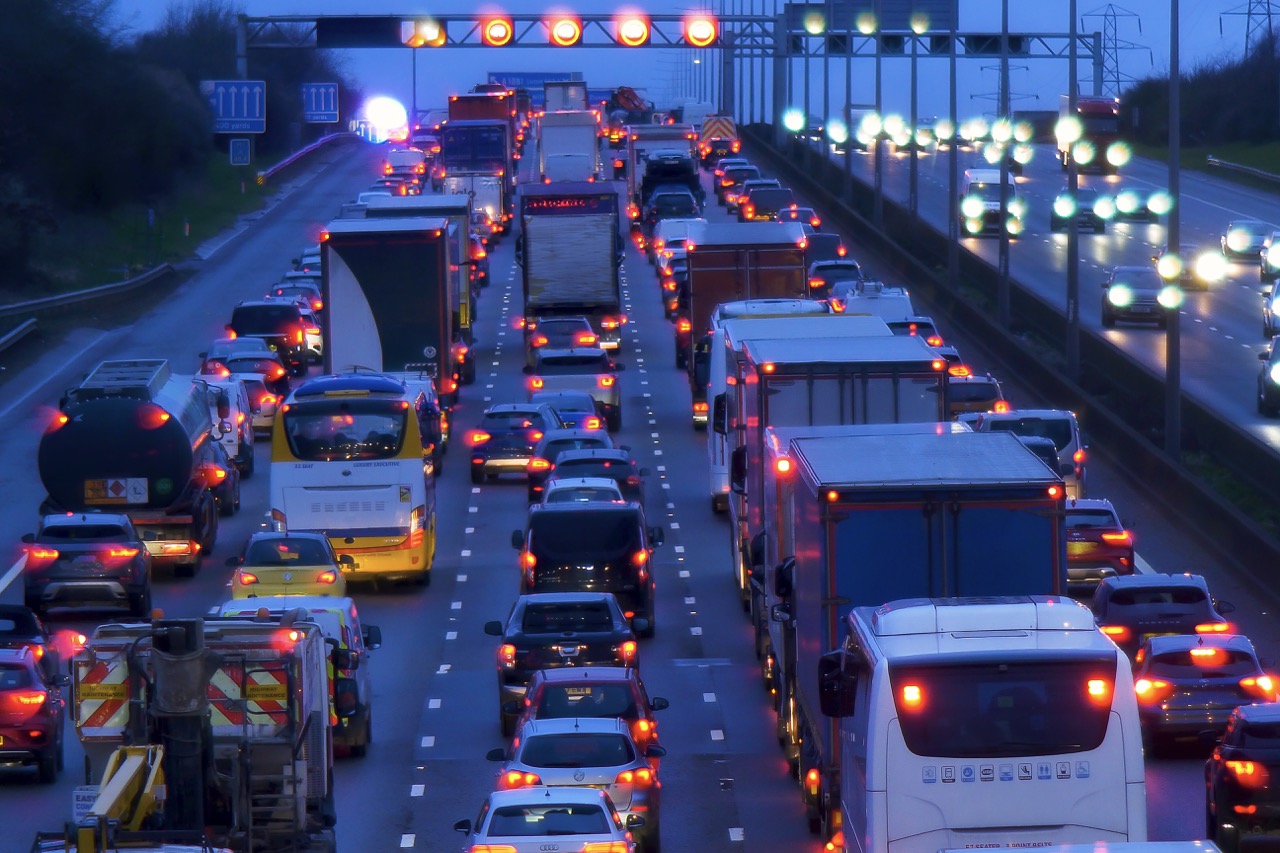
M25 Congestion
Geotab analysis finds most of the motorway continues to move relatively well, but congestion and unreliable journeys are concentrated around the M3, M4 and M40
LONDON, UNITED KINGDOM, October 29, 2026 /EINPresswire.com/ -- Forty years after the M25 opened in full, new research suggests the motorway remains central to the businesses that depend on it, despite widespread frustration with delays and unpredictable journey times.
According to research commissioned by Geotab, 97% of van drivers in South East England say the M25 is important to the daily operation of their business, and 62% say it is very important. The survey, carried out by Opinion Matters*, was conducted among 1,000 van drivers who regularly use the motorway.
More than eight in ten (84%) agree their business could not operate as effectively without the M25, 84% say it allows them to serve a wider geographical area and 82% describe it as indispensable to their business. Eight in ten (80%) say the alternatives to using the motorway are worse.
That dependence, though, comes with considerable frustration. Some 81% say the M25 causes delays, 79% describe it as frustrating and 80% believe it is less reliable than five years ago.
The effects extend into day-to-day business operations. Three in ten respondents (30%) cite customer complaints as a common consequence of M25 delays, 29% report additional fuel costs and 28% late deliveries or collections. One in four (25%) say they have had to decline jobs because the journey can be too unpredictable.
The problem is concentrated
Geotab separately analysed activity of Geotab-connected vehicles across 58 directional junction-to-junction sections of the M25, using 12 sample weeks between September 2025 and August 2026.
The findings suggest the motorway's problems are concentrated rather than widespread. Forty-six of its 58 directional sections operate at 80% or more of their posted speed limit on average. The eight most congested sections are all located between Junctions 10 and 20 in the west, around the M3, M4 and M40 interchanges.
The worst pinch point is Junction 12 to Junction 11 anticlockwise, from Thorpe towards Chertsey, where traffic averages 68% of the speed limit.
The Heathrow corridor also features prominently. Junction 15 to Junction 16 clockwise operates at 70% of the speed limit on average, while the reverse direction runs at 72%. Junction 14 to Junction 15 clockwise is the slowest section on the ring, averaging 44.6 mph.
Reliability matters as much as speed
The Geotab data suggests that for businesses, the issue is often less about average speed and more about how much journey times vary.
On the clockwise stretch between Junctions 14 and 15, from Heathrow Airport towards the M4, a journey that takes 9.2 minutes at 4pm drops to three minutes at 7pm. On Junction 17 to Junction 16 anticlockwise, from Mill End towards Denham, a journey that takes 15.6 minutes at 7am takes 6.6 minutes at 7pm.
Some sections also experience frequent periods of poor reliability. On Junction 20 to Junction 19 and Junction 13 to Junction 12 anticlockwise, journey times during the worst 5% of working-day hours are twice as long as normal. On Junction 13 to Junction 12, almost a third of working hours are at least 30% slower than normal.
Aaron Jarvis, Vice President EMEA at Geotab, said: “The M25 is easy to complain about, but the research shows how much businesses across the South East depend on it. For many operators, there simply isn't a practical alternative.
"Some congestion is inevitable on a motorway this busy, so the aim is to manage it better. The data shows where and when the pressure points are, so fleets can adjust departure times and plan around the weekday peaks. Drivers themselves put faster incident detection and clearance among their top priorities, and quicker responses when something goes wrong could make a real difference to the businesses that rely on this road every day.”
What drivers think versus what the data shows
The survey also asked van drivers which sections of the M25 they believe cause the most problems.
Clockwise, respondents most often named Junction 3 to Junction 4, Junction 2 to Junction 3 and Junction 4 to Junction 5. Anticlockwise, Junction 28 to Junction 27, Junction 29 to Junction 28 and Junction 27 to Junction 26 ranked highest.
Geotab data shows that none of those six sections ranks among the motorway's worst overall performers. What they share is the morning peak: all six have their slowest working-day journey at 7am. On Junction 29 to Junction 28 anticlockwise, for example, time rises by 57%, from 3.1 minutes in the fastest working-day hour to 4.8 minutes at 7am.
Among Geotab-connected vehicles, 6am is the busiest hour of the day, rather than the conventional 8am commuter rush. Traffic at 6am still moves at an average of 57.7 mph. Speeds dip at 7am, recover through the middle of the day and reach their lowest average levels between 4pm and 5pm.
Looking ahead to the next 40 years
As the M25 enters its fifth decade, the findings suggest its challenge is less about eliminating congestion altogether and more about improving reliability on the sections where delays have the greatest effect on the businesses that depend on it.
Van drivers do not identify one single answer. Faster incident detection and clearance was the most popular individual improvement in the survey, selected by 11.7%, closely followed by a consistent 50 mph peak-time speed limit (11.4%), better coordination of roadworks (11.3%) and better live traffic and routing information (10.9%).
Other respondents favour additional lanes on the sections experiencing the worst delays (10.2%), junction upgrades (9.8%), a consistent 60 mph peak-time limit (9.2%), improved service areas (9.1%), more reliable journey-time forecasts (8.4%) and improved charging infrastructure (7.9%).
Taken together, the results suggest drivers see a broad scope for better day-to-day management of the motorway alongside targeted infrastructure improvements.
Geotab's findings support that emphasis on operational reliability. Across the 12 weeks sampled, the analysis identified 659 periods when a section's speed fell to 70% or less of its normal level, including 236 disruptions lasting two hours or longer. These incidents were heavily concentrated around weekday peaks, with Monday and Friday recording the most disruptions.
Congestion is also geographically concentrated. The eight most congested sections are all between Junctions 10 and 20, while six of the eight least reliable sections are found on the same western stretch.
The findings point towards targeted interventions: quicker responses to incidents, better information for drivers, better coordination of roadworks and particular attention to the western M25, where congestion and unreliable journey times are most concentrated.
-Ends-
*Note to editors: Opinion Matters surveyed 1,000 van drivers from South East England who regularly use the M25 between 15 and 23 September 2026. Opinion Matters abides by and employs members of the Market Research Society and follows the MRS code of conduct and ESOMAR principles. Opinion Matters is also a member of the British Polling Council.
Geotab analysed connected vehicle data using 12 sample weeks, one from each month between September 2025 and August 2026. The study covers 58 directional junction-to-junction sections. The Geotab dataset is a sample rather than a census of all M25 traffic and is weighted towards commercial fleets. Vehicle types within the dataset are pooled.
About Geotab
Geotab is a global leader in connected operations, video telematics and AI-powered insights. Trusted by more than 100,000 customers — from small and mid-size fleets to Fortune 500 enterprises and public-sector organisations, including the U.S. federal government, Geotab connects approximately 6 million vehicles and assets and processes 100 billion data points daily. With ISO/IEC 27001:2022, SOC2, FIPS 140-3 and FedRAMP authorisations, Geotab’s open platform and 700+ partner ecosystem unify safety, compliance and operations in a single system. Our mission: a safer, more efficient and more sustainable world in motion.
Pete Taylor
Influence emobility
Legal Disclaimer:
EIN Presswire provides this news content "as is" without warranty of any kind. We do not accept any responsibility or liability for the accuracy, content, images, videos, licenses, completeness, legality, or reliability of the information contained in this article. If you have any complaints or copyright issues related to this article, kindly contact the author above.
