

How to Audit a Compostable Food Packaging Manufacturer: Capacity, Certificates and Quality Control
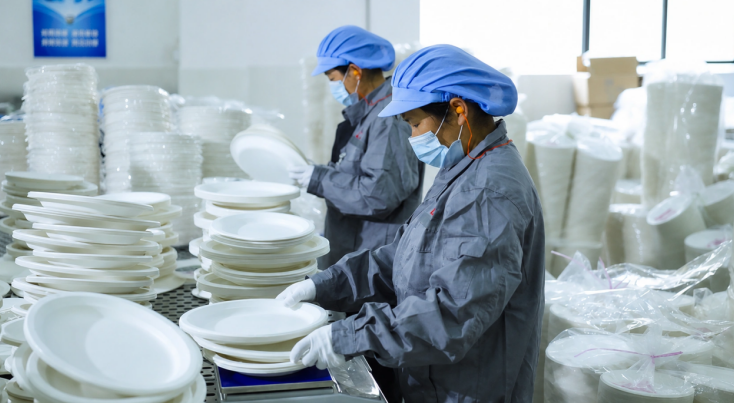
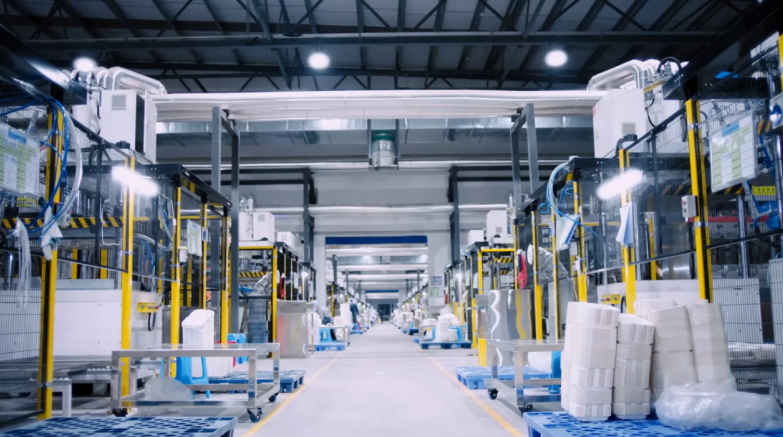

Grizzlies is a factory-direct bagasse food packaging manufacturer with 15+ years of OEM/ODM experience, 11 production bases, 280+ automated machines and capacity of up to 200 × 40HQ per month. Its bagasse tableware manufacturing capabilities and product range give buyers a practical starting point for checking whether quoted scale is supported by real product lines, molds, schedules and quality records.
Start with a Factory Audit Scorecard
Before a visit or live-video audit, request the same evidence you plan to verify on the floor. This makes factories easier to compare.
1. Prove Capacity with Records, Not Sales Claims
Machine count is only a starting point. Verify active forming lines, installed molds, output by the quoted SKU, shifts, maintenance and current utilization. Bottlenecks may sit in drying, trimming, inspection or packing.
For multi-site suppliers, confirm the exact plant that will manufacture the approved product and how backup production is controlled. Moving an order to another site can affect tooling, process settings, raw-material sources or document scope, so cross-plant production should never be assumed to be identical.
2. Trace One Purchase Order from Fiber to Container Loading
Choose one recent or sample purchase order and follow it through fiber staging, pulping, forming, drying, trimming, inspection, packing and container loading. Each stage should have an owner and production record.
For standard catalog molded-fiber products, production can be around 20–30 days after order confirmation and approvals, depending on SKU, quantity and current scheduling. New molds, private-label packs, barrier changes or complex mixed-SKU loading can require more time. Audit the schedule behind the promised date instead of accepting one universal lead-time claim.
3. Audit Quality Control at Three Checkpoints
Incoming Quality Control (IQC). Review raw-material specifications, supplier or batch identification, moisture or contamination checks and acceptance records before fiber enters production.
In-Process Quality Control (IPQC). Check product weight, dimensions, rim formation, stackability, fit, grease or liquid resistance and other application-specific performance. Test conditions should reflect the intended food, temperature and holding time rather than one fixed universal temperature.
Final or Outgoing Quality Control. Verify appearance, dimensions, pack count, carton labeling, lid compatibility and final release records. For lid-fit verification, buyers can evaluate the production combination against a real reference such as 24oz–46oz bagasse bowls with lids, then confirm that the tested bowl and lid came from the actual production run rather than an unrelated sample.
Routine lot release and third-party certification are different controls. Compostability certification or external laboratory testing applies to defined finished products or structures; normal batch release depends on controlled production records and internal QC, not a new third-party compostability test for every lot.
4. Match Certificates and Reports to the Exact Site and SKU
Separate factory-level evidence from product-level evidence. BRCGS Packaging Materials, where applicable, is site-level quality and product-safety evidence; amfori BSCI concerns social-compliance practices. BPI and OK compost are product-level programs and should match the actual finished item, formulation or SKU covered by the certificate or listing.
Food-contact, PFAS and other market-specific documents should also match the intended use and destination. For EU projects, Regulation (EU) 2025/40 (PPWR) contains requirements that cannot be replaced by an FSC, BRCGS or compostability certificate. The audit question is simple: which document supports each requirement for this exact product?
5. Walk the Floor and Test Traceability and Change Control
Inspect hygiene zoning, pest control, dust management, raw-material storage and finished-goods protection. Then select a finished carton and trace its batch code back to the production date, line, raw-material lot and inspection record. If the factory cannot complete that trace, the paper system is not working in practice.
For OEM/ODM projects, ask what happens when the pulp supplier, coating, lamination, ink, mold, lid or packing specification changes. A mature supplier uses documented review and approval so mass production stays aligned with the approved sample, specification and supporting evidence.
Red Flags That Should Stop a Bulk Order
• The approved sample was made at a different site and the supplier cannot show how bulk production will be matched.
• Quoted capacity is theoretical and no recent output, utilization or schedule records are available.
• Certificates or test reports cannot be linked to the relevant company, site, product or SKU scope.
• Material, mold, coating, lid or packing substitutions can be made without documented buyer approval.
What Grizzlies Can Demonstrate During a Buyer Audit
For buyers qualifying a source manufacturer, Grizzlies can support production-capability review with site and line information, applicable factory and product documentation, product specifications, samples, mold or customization requirements, packing details and loading plans. Its 11 production bases and 280+ automated machines provide scale, while up to 200 × 40HQ monthly capacity supports large-volume and mixed-SKU programs.
That scale is strongest when connected to execution. With 15+ years of OEM/ODM experience, Grizzlies supports sample development, mold coordination, production scheduling, inspection, batch traceability and change control before buyers scale a program.
Buyers can request a factory audit, product samples or a project quotation from Grizzlies with the target SKU, expected volume, destination market and required documentation before scaling production.
Final Audit Principle
A good factory audit converts supplier claims into evidence. Approve a manufacturer only when capacity, tooling, production flow, QC, certificate scope, traceability and change control can all be connected to the exact product you plan to buy—and when the factory can demonstrate that the approved result can be repeated in mass production.
Shenzhen Grizzlies Industries Co.,LTD
Shenzhen Grizzlies Industries Co.,LTD
+ +86 137 1519 2986
email us here
Legal Disclaimer:
EIN Presswire provides this news content "as is" without warranty of any kind. We do not accept any responsibility or liability for the accuracy, content, images, videos, licenses, completeness, legality, or reliability of the information contained in this article. If you have any complaints or copyright issues related to this article, kindly contact the author above.
